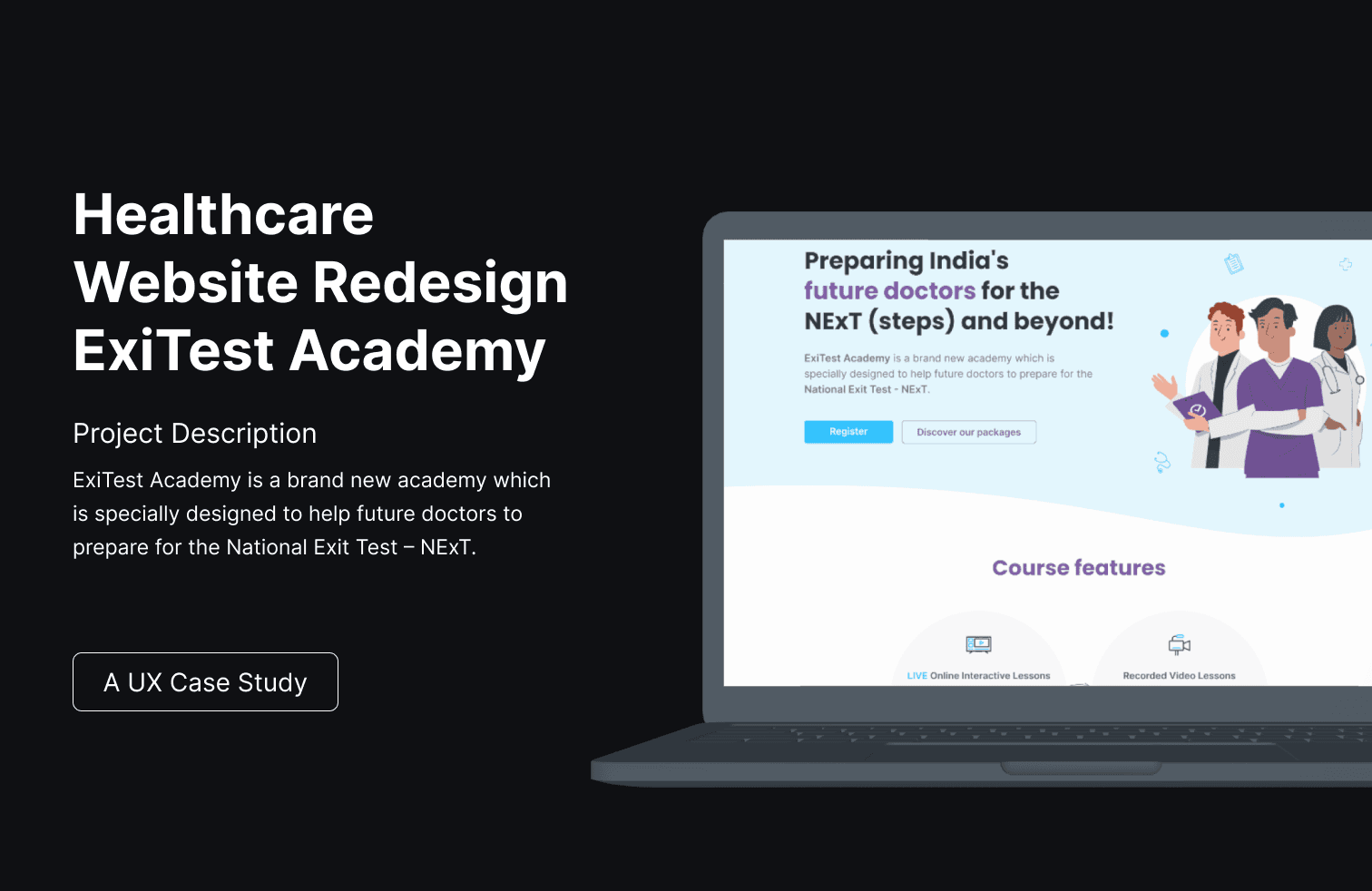
Healthcare Exam Platform
A full UX redesign of a healthcare exam platform used by medical professionals. I led end-to-end research, IA, wireframing, and high-fidelity design — improving flow clarity, reducing task time, and increasing completion rates for certification exams.
Client:
Healthcare
Date:
Type:
Website Design
Role:
UI/UX Designer
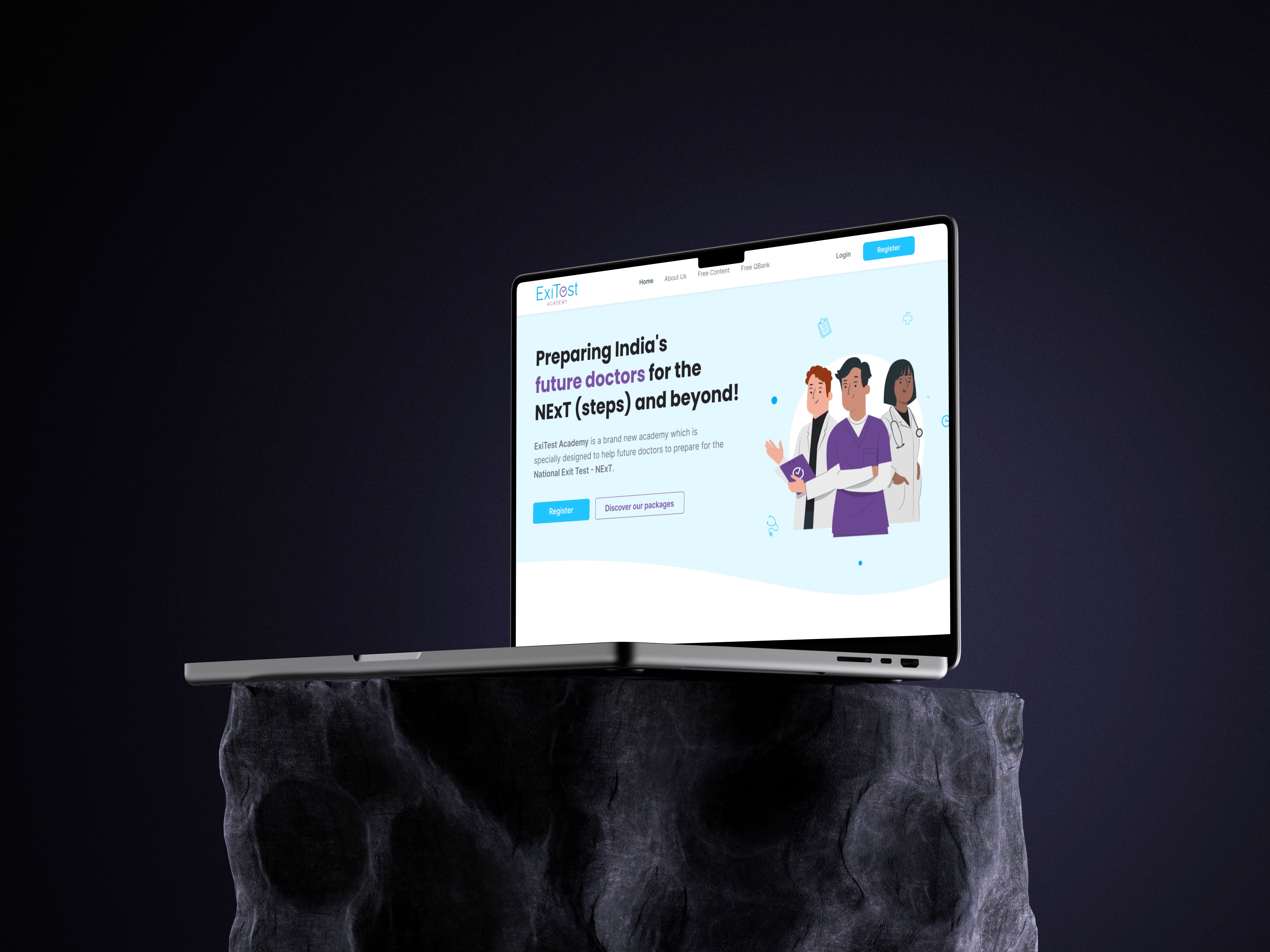
Overview
The Healthcare Exam Platform is a certification and assessment tool used by medical professionals across India. The existing platform suffered from poor usability — complex navigation, cluttered layouts, and low exam completion rates. I was brought in to conduct a full UX redesign to improve clarity, reduce cognitive load, and increase completion rates.
My Role
Senior UX Designer (End-to-End)
Client: TCS / Healthcare Division
Duration: 6 months
Tools: Figma, Adobe XD, Maze (usability testing)
Problem Statement
Medical professionals were abandoning exams mid-way due to confusing navigation and poor information hierarchy. The platform had a 38% drop-off rate during certification exams, and support tickets related to "can't find questions" or "lost progress" were high.
Research & Discovery
Conducted 12 user interviews with doctors, nurses, and exam administrators. Key pain points: unclear progress indicators, no save-and-resume feature, poor mobile experience, and inaccessible typography.
Design Process
Information Architecture — Restructured the exam flow into logical sections with clear milestones.
Wireframing — Created low-fidelity wireframes for 3 alternative navigation patterns.
Usability Testing — Ran A/B tests with 20 participants using Maze; identified the optimal layout.
High-Fidelity Design — Built a clean, WCAG-compliant design system in Figma with accessible color contrast.
Key Improvements
• Added a persistent progress bar and section navigator
• Introduced auto-save with visual confirmation
• Redesigned question cards with improved typography and whitespace
• Built a responsive layout optimized for tablets used in clinical settings
Results
• Exam completion rate improved by 42%
• Task completion time reduced by 28%
• Support tickets dropped by 60% post-launch
• NPS score from medical staff improved from 34 to 67